How businesses can identify critical replacement parts, reduce emergency sourcing and build a more reliable inventory strategy.
Inventory Forecasting5 min read
Which Replacement Parts Should You Keep in Inventory? A Practical Guide
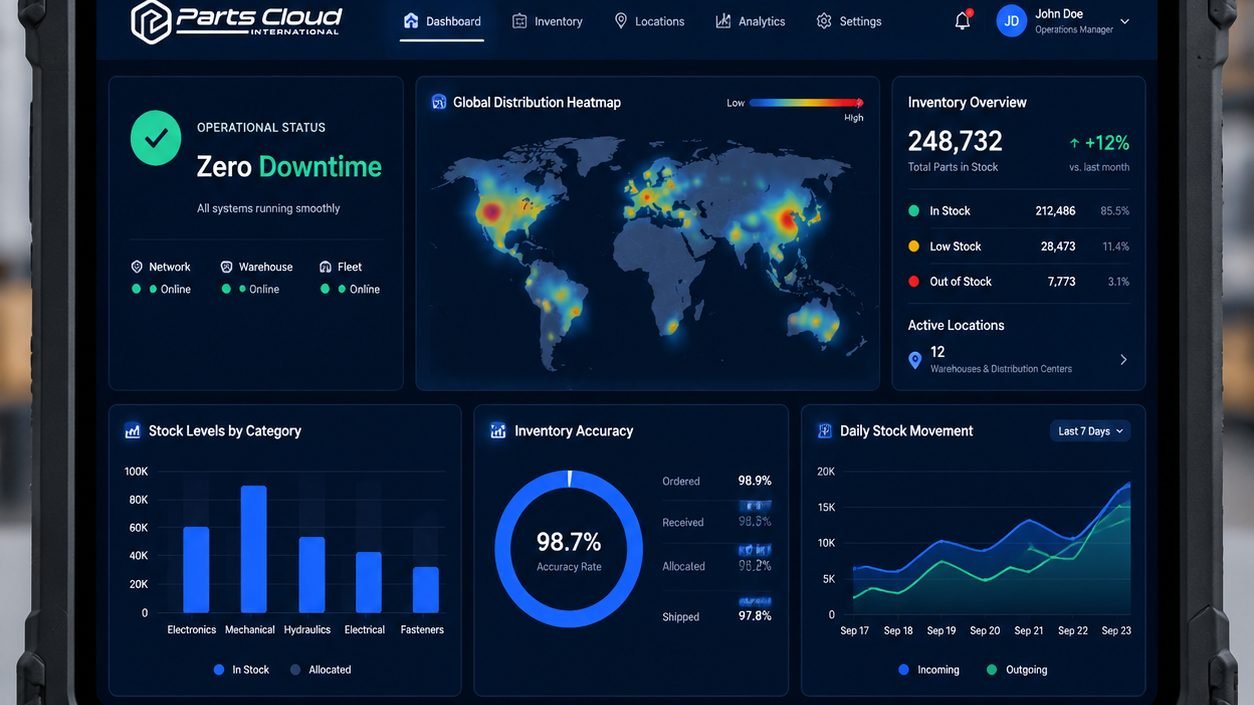
When equipment depends on replacement components, one question eventually becomes unavoidable:
Which parts should we keep in inventory before we actually need them?
Keeping everything in stock is expensive and inefficient.
Keeping nothing in stock can create delays when a critical component fails.
The solution is finding the right balance between availability, demand, lead time and operational importance.
For companies that maintain coffee equipment, vending machines, beverage systems, appliances, automotive equipment or industrial machinery, a structured replacement-parts inventory strategy can help reduce unexpected sourcing problems.
Not Every Part Deserves the Same Inventory Strategy
A common mistake is treating every replacement component the same way.
A frequently used component with a two-day lead time does not necessarily need the same inventory strategy as a low-volume component that takes six weeks to obtain.
Instead, replacement parts can be evaluated according to several factors.
1. Frequency of Use
Start with your service history.
Which components are requested repeatedly?
If technicians are regularly requesting the same part, maintaining a certain quantity may make sense.
For example:
- 20 units used per month
- 15 units used per quarter
- 2 units used per year
Each situation requires a different inventory approach.
2. Lead Time
Lead time is one of the most important variables.
A component that can be delivered tomorrow may not require significant safety stock.
A component that takes several weeks to manufacture or source may deserve more attention.
Consider:
Short lead time → easier to replenish
Long lead time → greater need for planning
This becomes particularly important when the component is required to return equipment to service.
3. Availability
Some parts are easy to find.
Others are not.
A component may become difficult to source because it is:
- Discontinued
- Low volume
- Specialized
- No longer manufactured by the original supplier
- Available only in large quantities
- Offered with long lead times
Parts with limited availability can create greater operational risk when they are not planned for in advance.
4. Equipment Criticality
Not every component has the same impact when it fails.
Ask:
What happens if we do not have this part today?
If the answer is:
“The equipment cannot operate.”
that component deserves more attention than one that can wait several days.
This is especially important for businesses supporting equipment used in commercial or production environments.
5. Cost of Downtime
The purchase price of a replacement part is only one part of the equation.
Consider the potential cost of waiting for it.
A $30 component could potentially create a much larger operational problem if its absence keeps a machine unavailable for several days.
Inventory decisions should therefore consider:
Part cost + sourcing cost + potential downtime impact.
6. Can the Part Be Manufactured When Needed?
Some components do not need to be stored indefinitely.
Instead, businesses can determine whether they can be manufactured on demand when required.
This can be useful for:
- Low-volume components
- Older equipment
- Custom replacement parts
- Discontinued components
- Parts with predictable specifications
In these situations, maintaining the information needed to reproduce the component can be as important as physically keeping hundreds of units in storage.
7. Consider a Hybrid Inventory Strategy
The best approach does not have to be:
Stock everything
or
Stock nothing.
A hybrid strategy can combine several approaches.
Frequently Used Parts
Maintain inventory based on historical demand.
Critical Parts
Keep strategic quantities available because of their operational importance.
Hard-to-Source Parts
Consider maintaining additional stock because replenishment may take longer.
Low-Demand Parts
Evaluate whether on-demand manufacturing or sourcing makes more sense.
Custom Components
Maintain specifications and production information so additional quantities can be produced when required.
A Simple Replacement-Part Classification
Businesses can create a basic framework like this:
| Part Type | Demand | Availability | Suggested Approach |
|---|---|---|---|
| Frequently used | High | Easy | Maintain regular stock |
| Frequently used | High | Difficult | Maintain strategic stock |
| Low demand | Low | Easy | Order as needed |
| Low demand | Low | Difficult | Plan supply in advance |
| Critical component | Variable | Long lead time | Consider safety stock |
| Custom component | Variable | Manufactured | Plan production/replenishment |
This does not replace a detailed inventory analysis, but it provides a useful starting point.
What About Parts You Don’t Have Yet?
This is where inventory planning becomes particularly valuable.
Suppose a company has identified 30 recurring replacement components.
Some are already in stock.
Others are routinely purchased.
A few have caused emergency sourcing problems.
Instead of waiting for the next failure, the company can create a list of:
Current inventory
Historical usage
Lead time
Supplier availability
Criticality
Replenishment options
This creates a clearer picture of where the real inventory risks are.
Inventory Should Be Connected to Your Parts Supply
Inventory planning becomes even more effective when businesses consider how each component will be replenished.
For some parts, that may mean purchasing from an existing supplier.
For others, it may mean custom manufacturing.
For difficult components, it may mean producing a planned quantity before the existing inventory reaches zero.
This is where a parts manufacturing and sourcing partner can become part of the inventory strategy.
How Parts Cloud International Approaches Inventory Solutions
Parts Cloud International helps businesses evaluate their replacement-part requirements and identify practical ways to maintain access to the components they need.
Depending on the situation, solutions can include:
- Replacement-part sourcing
- Custom part manufacturing
- Planned production
- Recurring part supply
- Inventory support
- Replenishment planning
- Hard-to-source component solutions
The objective is not to encourage businesses to carry more inventory than necessary.
It is to help them determine which parts deserve attention and how those parts can be supplied when needed.
The Goal: Fewer Surprises
A strong replacement-parts strategy does not mean having a warehouse full of every possible component.
It means knowing:
What you use.
What is difficult to obtain.
What can stop your operation.
How long each part takes to replenish.
And what your alternative supply options are.
When those questions have clear answers, businesses can make more informed inventory decisions.
Need help evaluating your replacement-part inventory?
Parts Cloud International can help you identify sourcing, manufacturing and inventory options for your recurring and hard-to-source components.
Tell us what parts you use, what parts are difficult to find and what equipment they support.
More Resources
- Case Studies
- October 1, 2026
Case Study: Keeping Coffee Equipment Running When a Critical Part Is No Longer Available
How a custom replacement part helped a commercial coffee equipment service company keep older machines operational.
Read Article
- Case Studies
- October 1, 2026
Case Study: Keeping Vending Machines in Service When Replacement Parts Are Hard to Find
How a custom replacement-part solution helped a vending equipment service company support older machines and reduce repair delays.
Read Article
- Case Studies
- October 1, 2026
Case Study: Helping an Automotive Service Company Source a Hard-to-Find Replacement Component
How custom replacement manufacturing helped an automotive service company address a difficult-to-source component and support vehicles that were still in service.
Read Article